
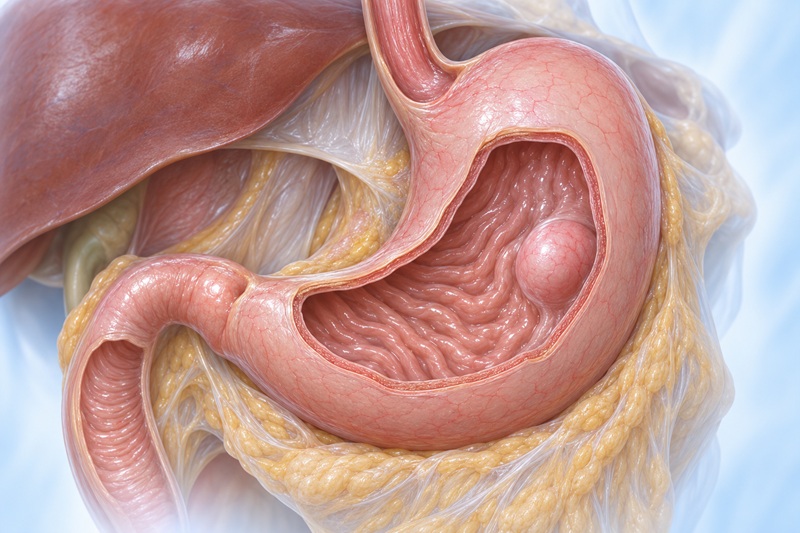
Not all stomach surgery is performed for weight loss. Selected benign, neoplastic, structural, and postoperative gastric conditions may require removal, repair, or reconstruction of part of the stomach. Robotic and laparoscopic techniques may allow some of these operations to be performed through small incisions.
The appropriate treatment depends on the diagnosis, location of the abnormality, symptoms, pathology, and whether cancer is suspected.
Robotic stomach surgery uses small incisions and advanced robotic instruments to treat conditions of the stomach and esophagus. The robot provides the surgeon with enhanced dexterity, 3D high-definition visualization and greater precision allowing for safe and effective treatment of both benign and complex conditions.
Procedure may include anti-reflux surgery, Hiatal hernia repair, gastric tumor removal and revisional bariatric surgery.
Superior visualization and precise dissection in challenging areas.
Minimally invasive technique using small incisions.
Many patients experience less pain and discomfort.
Most patients go home the same day or the next day.
Earlier return to normal activities for many patients.
Reduced risk of infection, blood loss and wound complications.
Evaluation may include upper endoscopy, biopsy, CT imaging, endoscopic ultrasound, laboratory testing, and review of prior operative records. When a tumor is present, the diagnosis and oncologic implications should be clarified before an operation is selected.
Depending on the condition, surgery may involve local removal of a lesion, wedge resection, partial gastrectomy, repair of a defect, or other reconstruction. The goal is to treat the underlying condition while preserving normal stomach function whenever medically appropriate.
Robotic surgery may be useful for selected gastric operations because of enhanced visualization, articulated instruments, and suturing capability. The best approach depends on tumor location or anatomy, prior surgery, the need for lymph-node evaluation, and the complexity of the planned reconstruction.
Recovery depends on how much of the stomach is treated and whether reconstruction is required. Some patients resume oral intake quickly, while more complex gastric operations require a gradual return to eating and closer nutritional follow-up.
Potential risks include bleeding, infection, leak, narrowing or obstruction, delayed gastric emptying, injury to nearby organs, nutritional problems after larger resections, blood clots, need for additional procedures, conversion to open surgery, and anesthesia-related complications.
No. Stomach masses can be benign, precancerous, or malignant. Examples include benign polyps and other lesions, gastrointestinal stromal tumors (GISTs), and gastric cancers. Endoscopy, imaging, biopsy, and pathology are used to determine the diagnosis and guide treatment.
In selected cases, yes. Robotic or laparoscopic surgery may be appropriate for some gastric GISTs, particularly when the tumor’s size and location allow safe removal while preserving stomach function. Larger, difficult-to-access, or more complex tumors may require a different approach. Treatment planning should also consider the tumor’s biologic behavior and oncologic requirements.
It depends on the condition. Some lesions can be treated with a limited local or wedge resection, while others require removal of a larger portion of the stomach. The goal is to completely treat the underlying disease while preserving as much normal stomach function as is safely and medically appropriate.
It may. The effect depends on how much of the stomach is removed or reconstructed. After a small resection, long-term eating may change very little. Larger gastric operations can require smaller meals, gradual diet advancement, nutritional monitoring, and sometimes vitamin or mineral supplementation.
Non-bariatric gastric surgery is performed to treat a specific stomach condition such as a tumor, mass, structural problem, or other gastric disease. Bariatric surgery is designed primarily to treat obesity and related metabolic disease by intentionally changing stomach size and, for some procedures, the pathway of food through the digestive system. The goals, anatomy, and long-term follow-up requirements are different.

The presence of a condition does not automatically mean that surgery is necessary or that a robotic approach is best. Treatment should be based on symptoms, diagnostic findings, anatomy, prior operations, overall health, and the expected risks and benefits of each option.
This page is for general educational purposes and does not replace individualized medical advice. The appropriate treatment and surgical approach depend on the patient’s diagnosis, anatomy, medical history, prior operations, and other clinical factors. A physician-patient relationship is established only after an appropriate clinical evaluation and acceptance into care.