
An inguinal hernia occurs when tissue pushes through a weakened area in the lower abdominal wall or groin. Some hernias cause only a visible bulge, while others lead to pain, pressure, activity-related discomfort, or progressive enlargement. Surgery is the definitive treatment when repair is appropriate.
Advanced robotic and minimally invasive techniques for common abdominal conditions. Our approach focuses on safety, precision and faster recovery so you can get back to life sooner.
Inguinal hernias develop in the groin where the abdominal wall is naturally weaker. They may occur on one side or both sides and can become more noticeable with coughing, lifting, standing, or physical activity.
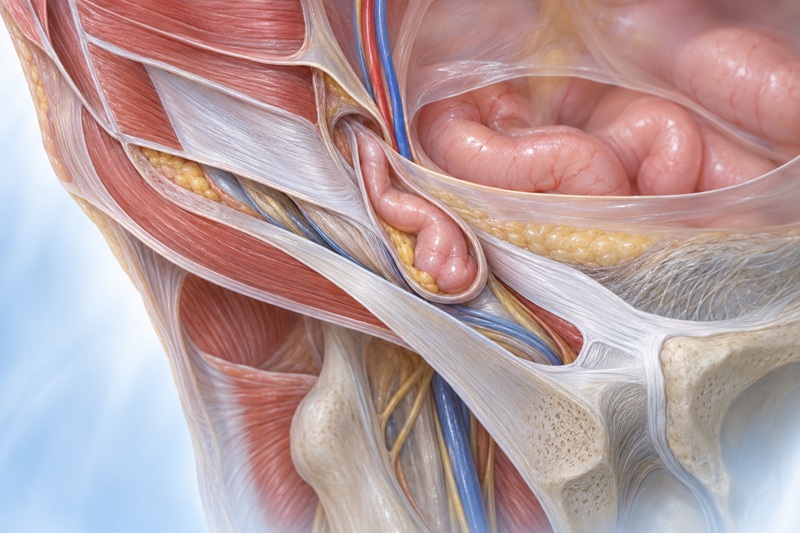
Not every inguinal hernia requires immediate surgery. Repair is often considered when the hernia causes symptoms, enlarges, limits activity, becomes difficult to reduce, or when the risks of continued observation outweigh the risks of surgery.
Robotic inguinal hernia repair is performed through several small incisions. The hernia is reduced, the weakened area is identified, and the repair is reinforced - commonly with mesh - when appropriate. The robotic platform can provide enhanced visualization and instrument articulation during dissection and suturing.
A robotic or laparoscopic approach may be particularly useful for selected patients with bilateral inguinal hernias, recurrent hernias after a prior open repair, or other anatomical considerations. The best approach still depends on the individual patient and the surgeon's assessment.
Many patients go home the same day after uncomplicated inguinal hernia repair. Walking is encouraged early. Return to work and physical activity varies according to the operation, symptoms, occupation, and individual recovery.
Potential risks include bleeding, infection, urinary retention, seroma or fluid collection, chronic groin discomfort, numbness, mesh-related complications, recurrence, injury to nearby structures, blood clots, and anesthesia-related complications. No technique eliminates the possibility of recurrence.
Small incisions instead of a large open incision.
Robotic technology allows for precise dissection and suturing.
Mesh reinforcement is used to strengthen the repair and reduce recurrence risk.
Many patients return to normal activities sooner compared to open surgery.
Less disruption to surrounding tissues may lead to less postoperative pain.
Robotic inguinal hernia repair may be an excellent option for many patients including those with:
The best approach depends on your specific condition, overall health, anatomy and prior surgeries. A personalized evaluation is essential.
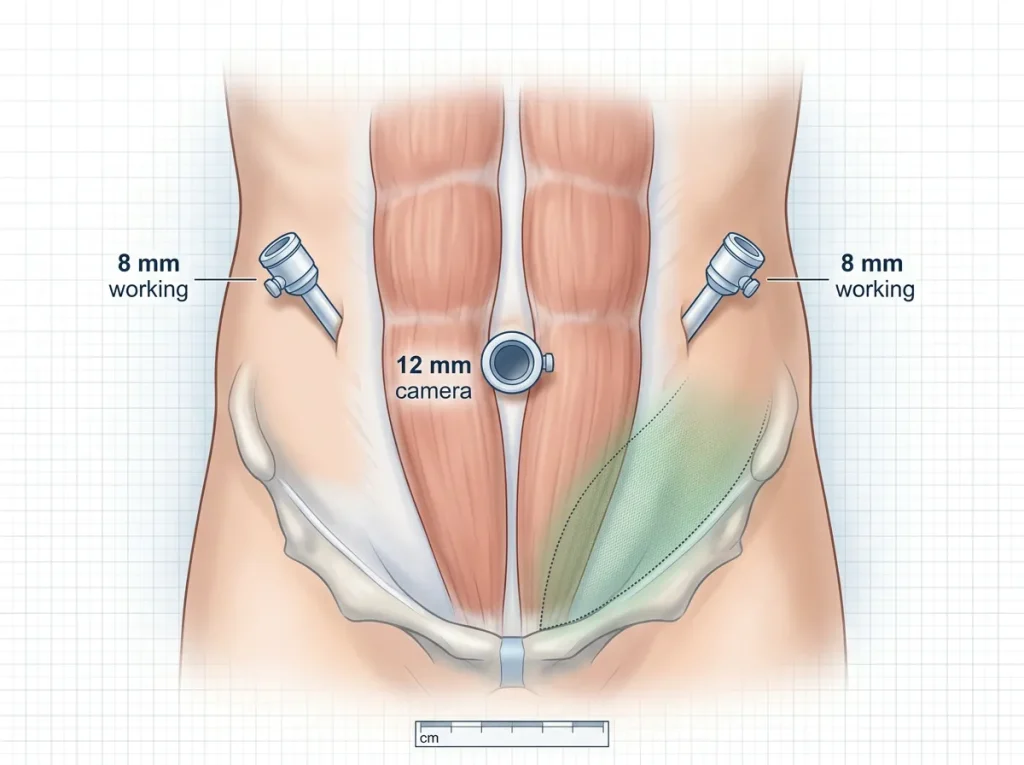
Robotic hernia repair is typically performed through 3 small incisions. Specialized robotic instruments and a high-definition 3D camera allow the surgeon to repair the hernia from inside the abdomen and place mesh to reinforce the area.
No. Not every inguinal hernia requires immediate repair. Some small or minimally symptomatic hernias can be monitored, depending on the patient and the clinical situation. Surgery is more often considered when a hernia causes pain or other symptoms, enlarges, limits activity, becomes difficult to reduce, or has features that raise concern for complications. Sudden severe pain, vomiting, or a tender bulge that will not go back in requires urgent medical evaluation.
No. Mesh is commonly used because it can strengthen the repair and reduce the chance of recurrence, but it is not required in every situation. The decision depends on the type and size of the hernia, the tissue quality, prior repairs, infection risk, and the surgical technique selected. The choice should be individualized with the surgeon.
Often, yes. When a patient has hernias on both sides, a minimally invasive approach may allow both groins to be evaluated and repaired during the same operation. Whether this is appropriate depends on the patient’s health, anatomy, symptoms, and operative findings.
In selected patients, yes. A robotic or laparoscopic approach can be useful for some recurrent inguinal hernias, particularly when the prior repair was performed through an open anterior approach. The best strategy depends on the previous operation, prior mesh, scar tissue, anatomy, and the surgeon’s assessment.
Walking and light activity are usually encouraged early after surgery. Return to work, exercise, and heavier lifting depends on the type of repair, symptoms, occupation, and individual recovery. Many patients resume routine activities relatively quickly, while strenuous exercise or heavy lifting may need to be limited for several weeks. Your surgeon should give you specific postoperative instructions.

The presence of a condition does not automatically mean that surgery is necessary or that a robotic approach is best. Treatment should be based on symptoms, diagnostic findings, anatomy, prior operations, overall health, and the expected risks and benefits of each option.
This page is for general educational purposes and does not replace individualized medical advice. The appropriate treatment and surgical approach depend on the patient’s diagnosis, anatomy, medical history, prior operations, and other clinical factors. A physician-patient relationship is established only after an appropriate clinical evaluation and acceptance into care.