
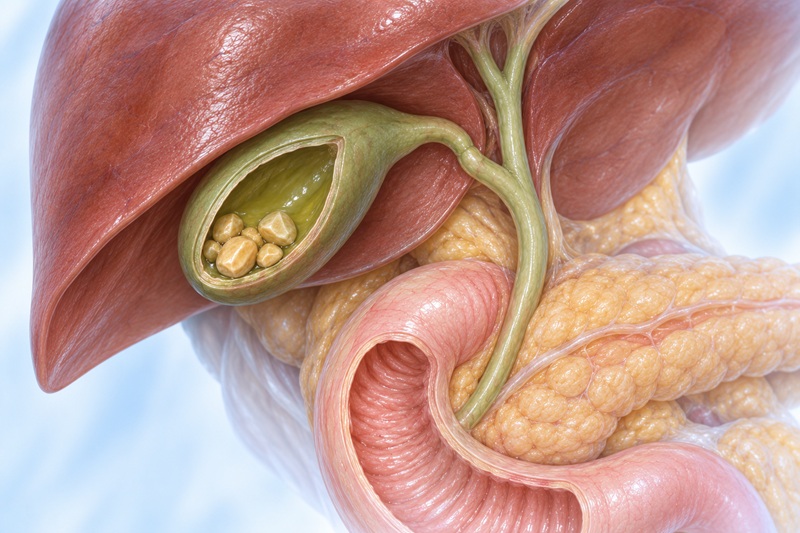
Gallbladder removal, or cholecystectomy, is one of the most common general surgical operations. It is most often performed for symptomatic gallstones or inflammation of the gallbladder. Most patients can be treated using a minimally invasive approach.
Gallstones are common and do not always require treatment.
Surgery is usually considered when stones or gallbladder disease are causing symptoms or complications.
Robotic gallbladder surgery is a minimally invasive cholecystectomy performed using robotic instruments through small incisions. The surgeon controls the instruments from a console. allowing for enhanced dexterity. 3D visualization and precision- helping to safety remove the gallbladder with less disruption to the surrounding structures.
3D visualization and precise dissection for safer surgery.
Minimally invasive technique using small incisions.
Many patients experience less pain and discomfort.
Most patients go home the same day or the next day.
Earlier return to normal activities for many patients.
Reduced risk of wound complications and infection.
Gallbladder removal may be recommended when you experience:
WE review your symptoms, medical history and perform a thorough evaluation.
You may have lab tests or imaging before surgery. we'll guide you every step of the way.
The gallbladder is removed using small incision with robotic precision.
Most patients go home the same day or the next day and begin recovering quickly.
We ensure you are healing well and answer any questions you may have.
During cholecystectomy, the gallbladder is separated from the liver and removed. The bile ducts remain in place so bile can continue to flow from the liver into the intestine. Most patients do not require the gallbladder for normal digestion.
Both robotic and standard laparoscopic cholecystectomy are minimally invasive approaches. Robotic technology may provide enhanced visualization and instrument control in selected cases. The choice of technique depends on anatomy, inflammation, prior surgery, and surgeon judgment.
Many uncomplicated gallbladder operations are performed as outpatient surgery. Patients are usually encouraged to walk soon after surgery and gradually return to normal diet and activity as tolerated. Some patients notice temporary changes in digestion after gallbladder removal.
Potential risks include bleeding, infection, bile leak, injury to the bile duct or nearby organs, retained bile duct stones, need for additional procedures, blood clots, conversion to open surgery, and anesthesia-related complications. Bile duct injury is uncommon but can be serious.
Severe or persistent abdominal pain, fever, jaundice, repeated vomiting, or signs of pancreatitis may indicate a complication that requires urgent medical evaluation.
No. Gallstones that are found incidentally and never cause symptoms often do not require treatment. Surgery is commonly recommended when gallstones cause recurrent attacks, gallbladder inflammation, pancreatitis, bile-duct problems, or other complications. The decision depends on symptoms, imaging, laboratory findings, and the patient’s overall health.
Yes. The gallbladder stores bile but is not an essential organ. After removal, bile flows directly from the liver into the intestine. Most people return to a normal diet and lifestyle. A small number of patients notice temporary loose stools or digestive changes after surgery.
Not necessarily. Both are minimally invasive approaches. Robotic surgery can provide enhanced visualization and articulated instruments, while standard laparoscopy is also highly effective and widely used. The best approach depends on the individual case, anatomy, inflammation, prior surgery, available technology, and the surgeon’s judgment.
Recovery is usually relatively quick after an uncomplicated minimally invasive gallbladder operation. Many patients return to desk-type or light work within about a week, while jobs involving heavy physical activity may require more time. Recovery should be guided by symptoms and the surgeon’s postoperative instructions.
Usually not. Most people can eventually eat a regular diet after gallbladder removal. Some patients temporarily tolerate smaller or lower-fat meals better while the digestive system adjusts. Persistent diarrhea, pain, or difficulty tolerating foods should be discussed with a clinician.

The presence of a condition does not automatically mean that surgery is necessary or that a robotic approach is best. Treatment should be based on symptoms, diagnostic findings, anatomy, prior operations, overall health, and the expected risks and benefits of each option.
This page is for general educational purposes and does not replace individualized medical advice. The appropriate treatment and surgical approach depend on the patient’s diagnosis, anatomy, medical history, prior operations, and other clinical factors. A physician-patient relationship is established only after an appropriate clinical evaluation and acceptance into care.